
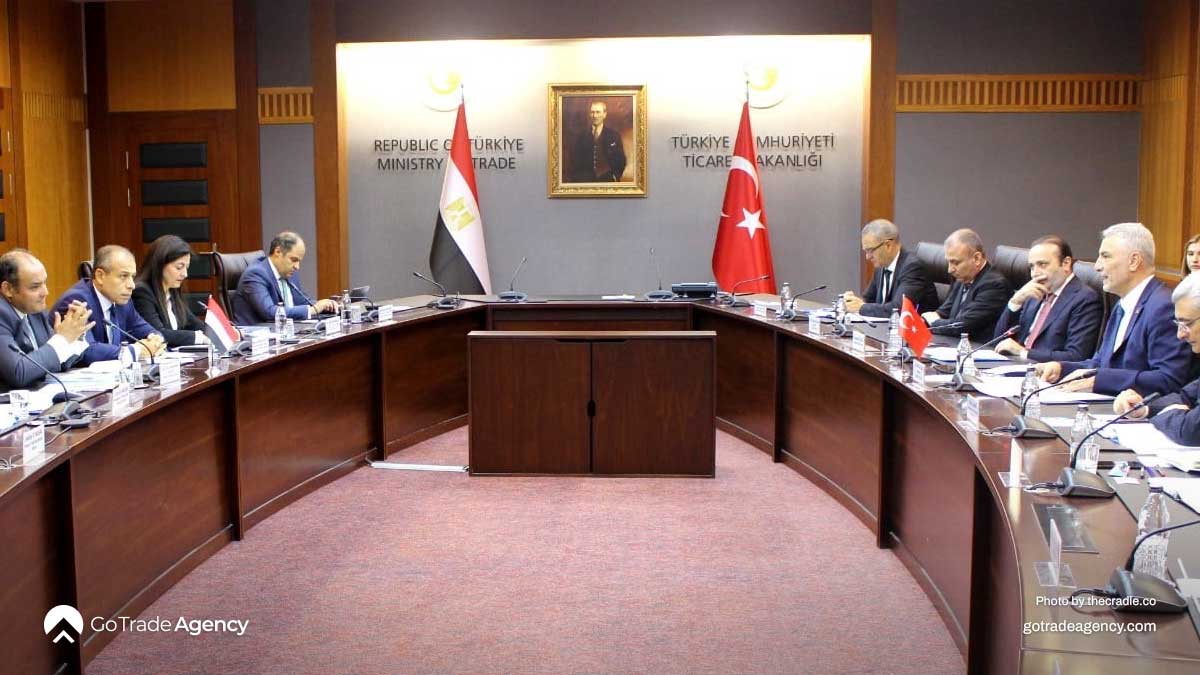
The Arab Republic of Egypt is undergoing significant economic reforms and infrastructure overhauls aimed at restoring its historical role as a trade and industrial powerhouse. With its geographical positioning at the crossroads of Africa, the Middle East, and Europe, Egypt has long been a strategic player in maritime and land-based trade routes. As Türkiye deepens its trade networks across the region, Egypt is emerging as a key partner in a new phase of regional integration.
A Geopolitical and Trade Bridge
Egypt’s Suez Canal remains one of the world’s most important maritime arteries, linking the Mediterranean to the Red Sea and facilitating nearly 12% of global trade. Türkiye, with its expanding logistics and production capabilities, is increasingly engaging Egypt as both a transit route and final destination for its goods. This synergy is no coincidence; both nations are leveraging their strategic locations to enhance trade flows across Africa, the Gulf, and Europe.
The reactivation of diplomatic ties between Türkiye and Egypt has been followed by discussions on expanding bilateral trade agreements, lowering tariffs, and improving customs collaboration. These initiatives are setting the stage for smoother trade, increased exports, and new business partnerships across textiles, construction materials, food products, electrical appliances, and machinery.
Industrial Zones and Supply Chain Collaboration
Egypt’s industrial development strategy has included the launch of specialized zones like the Suez Canal Economic Zone (SCZone), aimed at attracting global manufacturing and logistics investments. Turkish businesses are well positioned to invest in or partner with Egyptian firms in these zones, capitalizing on favorable policies, lower operational costs, and proximity to major African and Gulf markets.
Türkiye’s role in supplying intermediate goods such as packaging, machinery, and modular construction elements complements Egypt’s growing manufacturing base. The opportunity for joint ventures and co-manufacturing projects is expanding, especially in light industries and energy-related sectors.
Infrastructure Projects and Building Materials Trade
Egypt is witnessing a construction boom with new cities like the New Administrative Capital and megaprojects including transportation networks and logistics hubs. This surge creates a strong demand for high-quality, competitively priced construction materials; an area where Türkiye excels. Exporters of cement, steel, ceramic tiles, glass, and pre-engineered building components are already exploring Egyptian opportunities via direct shipments or through regional distributors.
Turkish logistics firms and freight forwarders are also seeking routes via Port Said and Alexandria, aligning shipping schedules with the demands of Egypt’s evolving trade landscape.
Food Security, Agriculture, and FMCG Growth
As Egypt aims to improve food security and stimulate domestic agriculture, Turkish firms specializing in irrigation technologies, fertilizers, seeds, and cold chain logistics can contribute meaningfully. In return, Egypt’s vast consumer base offers a prime market for Türkiye’s processed foods, private-label FMCG products, and innovative packaging solutions.
There is also increasing interest in collaborative agricultural ventures, especially in Upper Egypt and Sinai, where government incentives encourage foreign investment and technical cooperation.
Outlook: Shared Ambitions for Regional Prosperity
The Türkiye–Egypt trade relationship is entering a stage of mutual pragmatism and opportunity. With trade volume projected to surpass $10 billion in the coming years, the partnership is no longer just transactional; it is strategic. Both countries share aspirations to become trade and production hubs linking continents, and cooperation could unlock shared prosperity across the Arab world, Sub-Saharan Africa, and Europe.
For companies operating in regional supply chains, now is the time to explore Egypt not just as a market; but as a trade ally in a rapidly shifting global economy.