
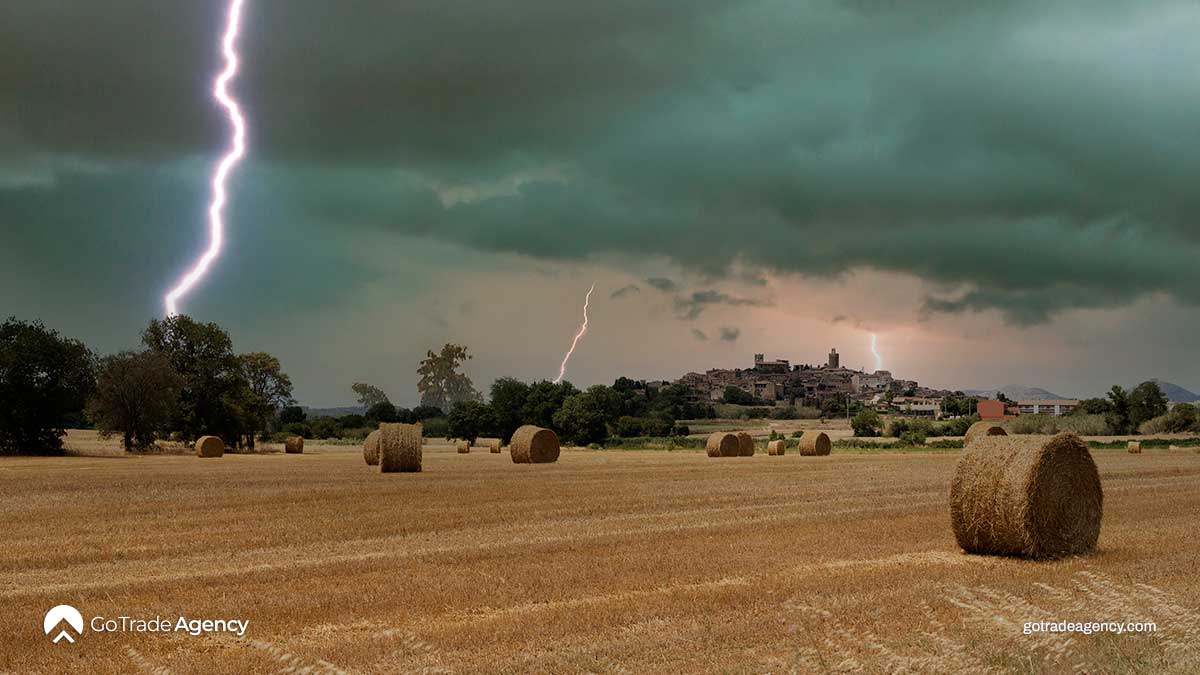
Agriculture remains at the mercy of climatic conditions and policy decisions. In South Australia, wild weather brought cold temperatures, dust storms, and localized flooding, but failed to deliver the widespread rain needed to break the drought affecting the state’s agricultural regions. Grain Producers SA expressed disappointment as dry-sown crops face damage from strong winds and dust instead of anticipated rainfall.
Similarly, in Maharashtra, India, heavy rains have damaged over 3,000 additional hectares of cropland, bringing the total damaged area to 34,842 hectares. Key crops like mangoes, bananas, and vegetables have been destroyed, leading to a significant drop in market arrivals and a surge in vegetable prices.
In the U.S., the agricultural sector is grappling with declining farm incomes, with a forecasted drop of $27.7 billion from 2023, led by significant decreases in corn and soybean receipts. Economists warn that the row crop side of agriculture is in a recession, potentially leading to further consolidation in the industry.
adelaidenow | The Times of India | Edited by: GTA Communications Department